Instructor guide + student field record
Notice a need. Build something better.
How a builder's pathway begins. Builders notice needs, make plans, work with others, and improve their work. These habits can begin in grade school.
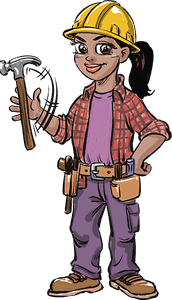
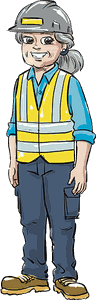
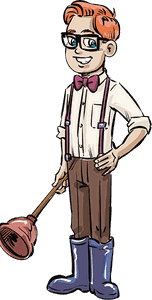
- Target age
- 10–12
- Lesson length
- 15 min
- Hands-on outcome
- Build + improve
- Series
- Intro · 02 of 02
- See it
- Try it
- Connect it
- Explain it
- Find it
How can I start thinking and working like a tradesperson now?
Hands-on outcome: A small team-built solution, one tested improvement, and a personal next step.
Learning objectives: Students identify a user's need, plan and test a simple solution, listen to a teammate, and name a safe next step they can take now.
Materials + setup
Per group of three: Two sheets of paper, six short strips of masking tape, three pencils, and a flat work surface.
Teacher: A notebook and a separate pencil for the demonstration. Prepare tape strips before class and keep materials ready for quick distribution.
You do not have to choose a job today. You can start noticing, making, helping, and learning today. Value thoughtful testing and teamwork, not the fanciest finished object.
15-minute run of show
- Notice the problem + why / how / what
- Plan with hands, mind, and crew
- Make and test
- Get feedback and improve
- Connect to a pathway
- Choose a useful next step
Optional home observation is outside the 15-minute lesson. Provide folded-paper starters or let students direct a partner when handling materials is difficult.
It's only a pencil...
0:00–2:00 · Hook + purpose
Gently tilt a notebook so a pencil rolls off onto the table. Ask:
"Imagine this happens over and over while someone is trying to draw. Is it a huge problem? No. Could we make their day a little better? Yes."
Give the challenge: "Build something that keeps three pencils together and stops them from rolling away. Use only your paper and tape."
The 30-second pitch
"The world around us needs people who notice problems and care enough to help."
"Builders look closely, ask questions, make a plan, and work together. They test their work and keep improving it."
"Today, your crew will solve a small classroom problem. Then you'll choose one habit you can practice now to help build, care for, or improve something around you."
Start with a visible need and a real user. Students build for a purpose, rather than simply making an object. Give the pitch before distributing materials.
A routine to remember
- Notice
- Plan
- Make
- Check
- Improve
Hands, mind, and crew
2:00–4:00 · Plan together
Ask each group: What needs to work better? What could we try? How will we know it works? Sketch a quick plan on the field record or explain it aloud.
Starting responsibilities
| Planner | Sketches the group's idea and asks for everyone's input. |
| Maker | Starts shaping and joining materials. |
| Tester | Checks the result and describes what happens. |
Everyone contributes ideas and helps build. Switch who handles the model during the improvement round.
"Before you choose a plan, hear one idea from every person."
Build for someone
4:00–8:00 · Make + test
Allow about three minutes to build and one minute to test. Use the same test before and after the improvement:
Put all three pencils into the holder.
Leave it on the flat table for ten seconds.
Remove and replace one pencil.
Check whether the holder still keeps the pencils together.
"What happened? What could you change?"
Praise specific habits: "You checked before adding more tape." "You listened to your partner's idea." "You changed the fold after the side collapsed."
Good work takes care and practice. A test that reveals a problem gives us information we can use to improve.
Another person sees more
8:00–10:00 · Feedback + improvement
Pair neighboring groups. Each crew gives one observation: "It worked when..." or "One thing you could try is..." Groups make one change and repeat the same test.
"What did another person help you notice?"
Connect to a real building: "On a house, a carpenter, plumber, and electrician need to coordinate where things go. If nobody shares information, one person's work can get in another person's way."
Big projects need people who listen and work together.
Your pathway starts now
10:00–13:00 · Connect to everyday habits
"A pathway is a series of next steps. You don't need to know your final job to take a useful next step."
Look closely
Notice a wobbling object, wasted material, or a space that is hard to use. Workers need to understand a problem before solving it.
Use school skills
Measure a model, read directions, or explain your idea. Trades use math, reading, science, and communication.
Practice making
Fold, assemble, draw, grow, and test age-appropriate projects. Repeated practice develops care and control.
Learn with others
Ask a teacher or trusted adult to explain a tool or demonstrate a skill. Skilled work grows through instruction and feedback.
Care for things
Organize shared supplies, care for a plant, or report something broken. Maintenance helps useful things last.
My next useful step
13:00–15:00 · Exit challenge
The longer view
Grade school
Explore and practice.
Middle + high school
Try classes, clubs, and supervised projects.
Later
Explore apprenticeships, technical education, or other supervised training.
"You can change your mind as you learn. Curiosity is a good place to start."
Exit challenge: Use the field record: I noticed... Helping would matter because... One safe step I can take is... Someone I can learn or work with is...
Example: "I noticed our art supplies get mixed together. Helping would save everyone time. I can ask permission to make labeled cardboard dividers. I can work with a classmate and ask our teacher what sizes we need."
Success looks like
Students identify a need, name whom it affects, propose a realistic step, and recognize how another person can help. During building, look for shared ideas and a change based on testing.
Optional home connection
With an adult, find one thing to build, care for, or repair. Choose a safe child-sized contribution. Noticing and reporting a problem counts. Children should not attempt repairs to electrical, gas, heating, plumbing, or structural systems.
Use a teacher-provided picture or a classroom example if a home activity is not suitable. Students may draw, dictate, or explain their answers aloud.
"You don't have to wait until you're grown up to be helpful. Start by noticing. Learn something. Work with someone. Make one thing better."
Closing line
Printable student field record
Our build + my next step
Name:Date:
Our crew's idea: sketch how your holder will keep three pencils together.
Our test showed...
We changed... / The next test showed...
My next useful step
I noticed...
Helping would matter because...
One safe step I can take is...
Someone I can learn or work with is...